
Olive grove management tasks
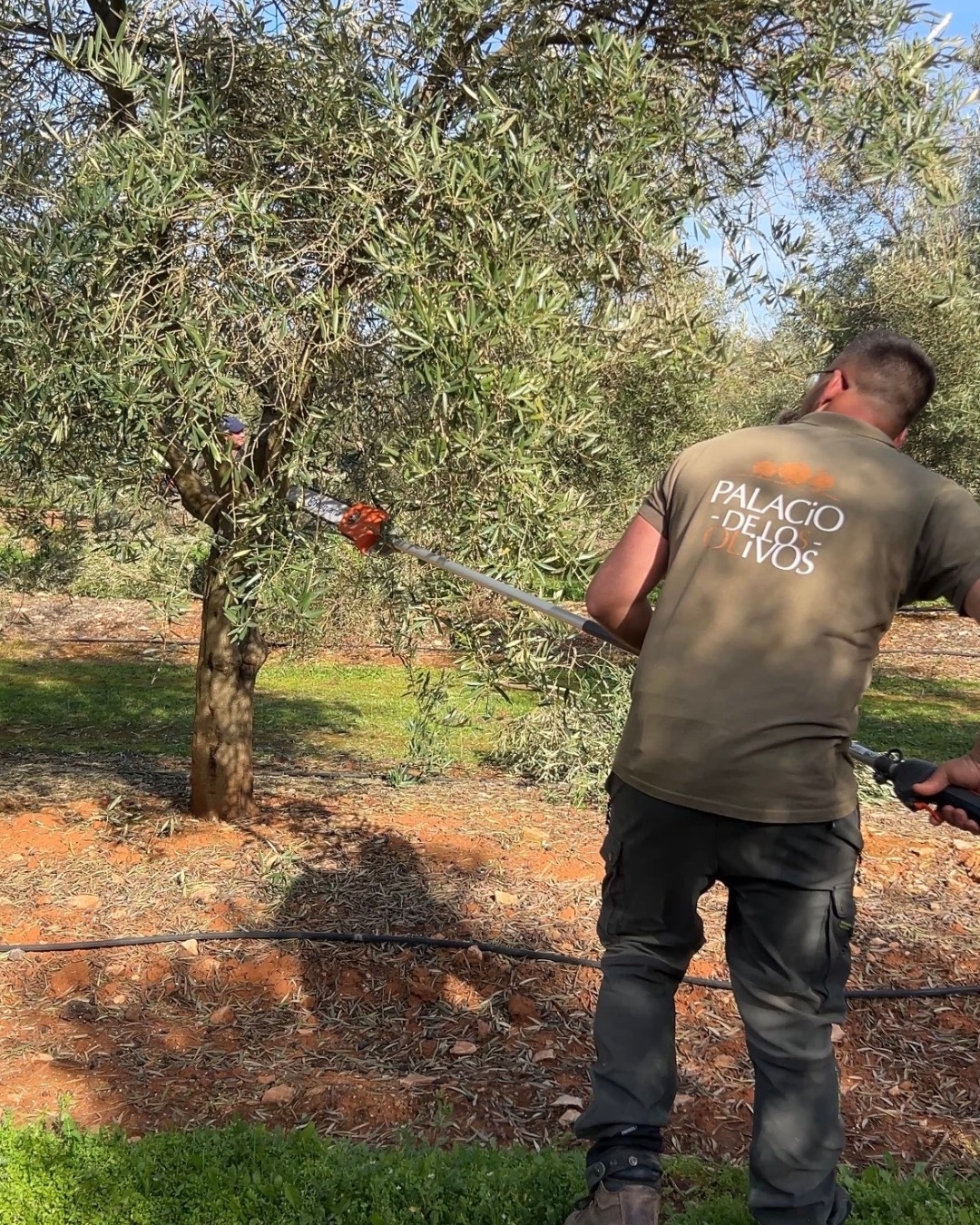
1. Finish Pruning
If you haven’t finished yet, hurry up! March is the ideal month.
-
Objective: To remove old or unproductive branches and “open up” the tree to allow light and air into the center.
-
Caution: If the sap is already flowing heavily, pruning wounds take longer to heal. Try to finish before the first new shoots appear.
2. Phytosanitary Treatments
After pruning, it is mandatory to protect the olive tree.
-
Peacock Spot (Repilo): Spring humidity and mild temperatures are the perfect breeding ground for this fungus (famous for the spots on the leaves).
-
Action: Apply a copper-based treatment. In addition to preventing peacock spot, copper helps “disinfect” the pruning cuts.
3. Fertilization and Nutrition
The olive tree needs energy for the upcoming flowering season.
-
Nitrogen: This is the key player in March to encourage the growth of new shoots. You can apply it to the soil or, if there is already enough foliage, via foliar spray.
-
Other deficiencies: If your soil is limestone-based, keep an eye on micronutrients (like Boron), which are essential for a successful fruit set later on.
4. Soil Management
With the spring rains, grass grows quickly and competes with the olive tree for water and fertilizer.
-
Clearing/Mowing: If you maintain a cover crop, now is the time to control it so it doesn’t “drink” the water the tree will need in the summer.
-
Tilling: If you prefer bare soil, a very shallow tilling can help bury the fertilizer and eliminate weeds.